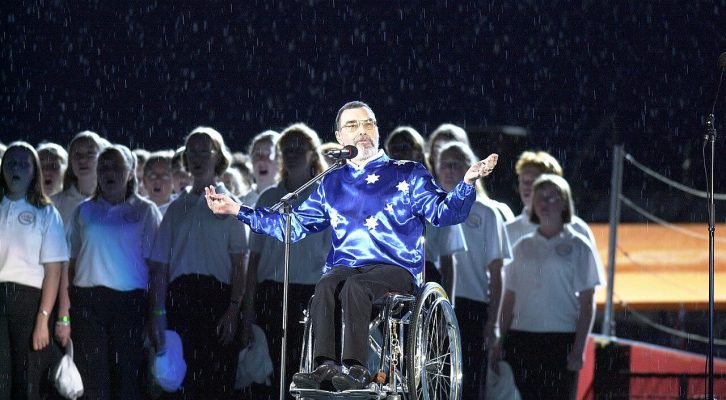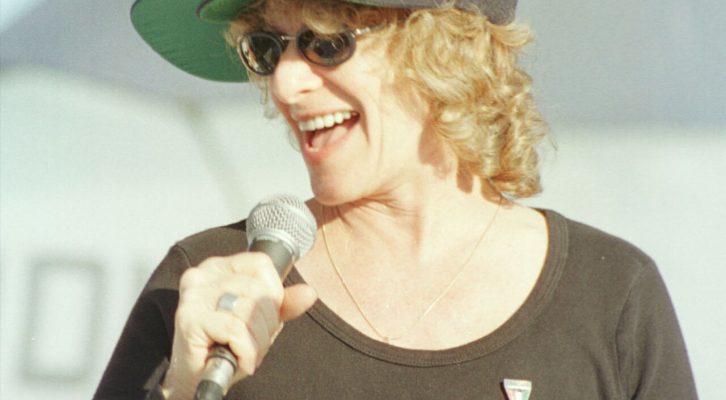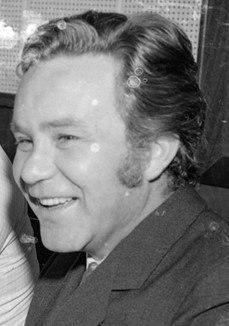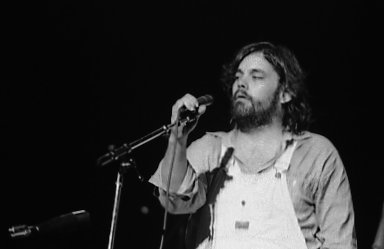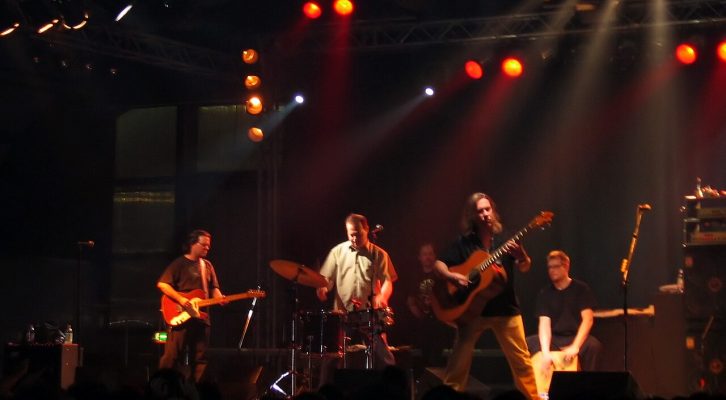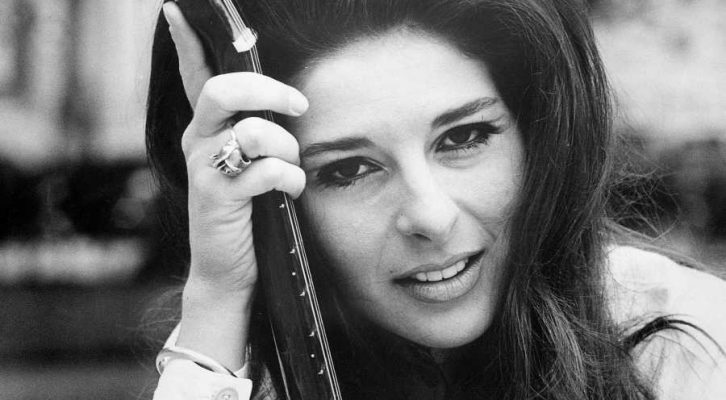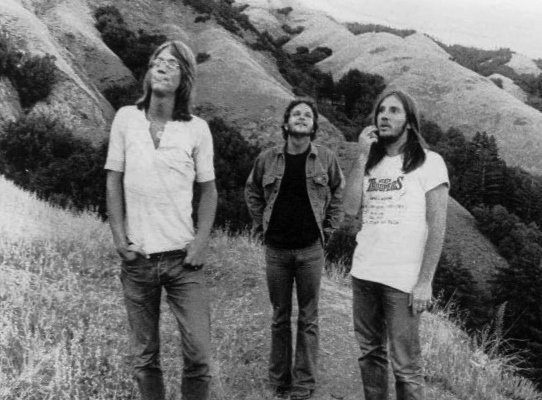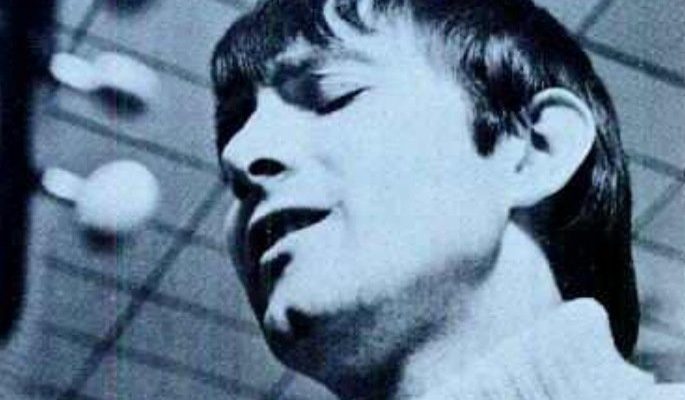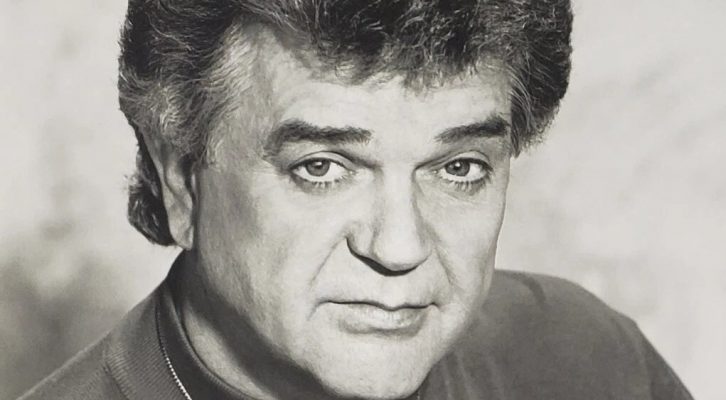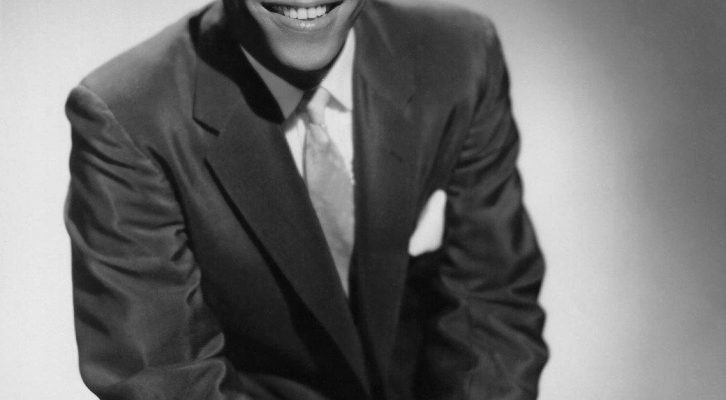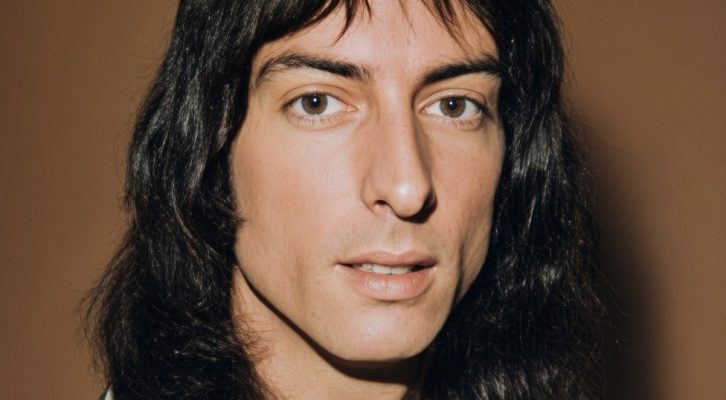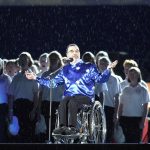
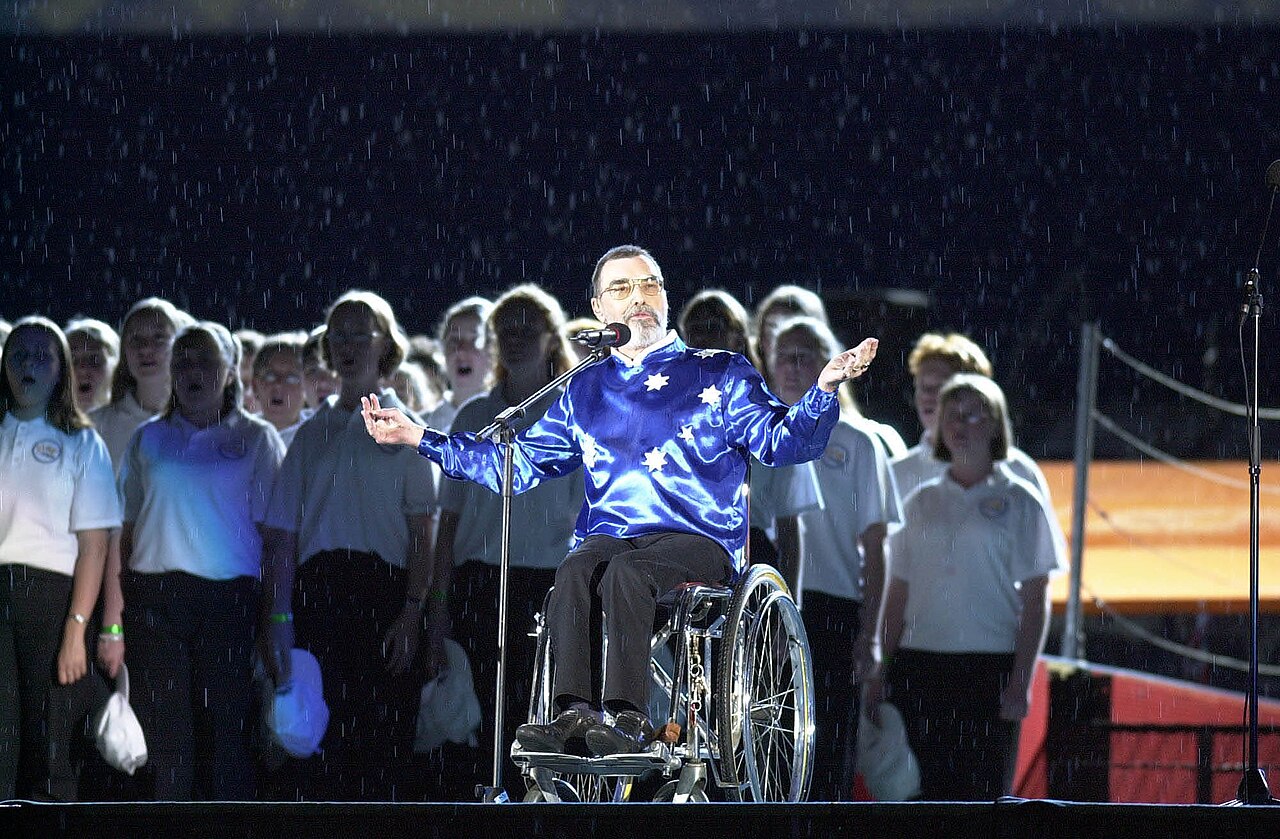
Jeff St John performs at the Sydney 2000 Paralympic Games opening ceremony. Photo: Sport the library, CC BY-SA 3.0, via Wikimedia Commons
Most singers have a trademark move. Jeff St John’s was a wheelie. From the late 1960s he performed from a wheelchair, and rather than park it centre stage he’d spin it, pirouette and pop it up on its back wheels while belting out a soul number (Can Do Musos). “With crutches, your hands are always full,” he explained. The chair gave him the run of the stage.
Ask anyone who worked the dance halls in the late sixties about the best voice they heard live and his name comes up a lot. He sang soul like he’d grown up in Detroit, not Newtown.
Who was Jeff St John?
He was born Jeffrey Leo Newton in Newtown, Sydney, on 22 April 1946, with spina bifida (Wikipedia). He had a string of operations as a child and used crutches from early 1965, and by the end of the decade the wheelchair was part of the act. He died at Fiona Stanley Hospital in Perth on 6 March 2018, aged 71 (Noise11). We honour him in our Rock n Roll Heaven.
A teenage talent quest and Opportunity Knocks
Jeff was 15 when he came third in a television talent quest. The producers liked him enough to give him a permanent spot, and he appeared weekly for about three years (Nostalgia Central). The show was Opportunity Knocks, the teenage variety program hosted by Desmond Tester on Channel 9 between 1961 and 1963, where he was a regular feature vocalist (Can Do Musos).
The Id, Yama and Copperwine
His first proper band was the Syndicate, also known as the Wild Oats, in 1965. With the Id he broke through in 1967 on ‘Big time operator’, a slab of Aussie rhythm and blues that got to number 12 on the Go-Set National Top 40 in March and number 11 on the Kent Music Report. The band picked up spots on TV music shows around the country on the back of it (Nostalgia Central). Jeff St John & Yama followed in 1967–68. If you only know one Jeff St John record, it’s probably ‘Big time operator’, and it still sounds tough nearly 60 years on.
Copperwine, from 1969 to 1972, is where a lot of fans think he peaked. For a stretch in 1970 and 1971 he shared lead vocals with Wendy Saddington, which must have been something to see in a small room. ‘Teach me how to fly’, issued in November 1970, reached number 16 on Go-Set and number 11 on the Kent Music Report. The band recorded a live album at the Wallacia Festival in January 1971, and the studio album Joint effort came out the same year. The line-up over those years included Peter Figures on drums, Ross East on guitar, Barry Kelly on keyboards and Alan Ingram, then Harry Brus, on bass (Wikipedia). Like Billy Thorpe and the Aztecs, they were a powerhouse on the live circuit, and they opened for international acts including Chuck Berry (Noise11).
Asylum Records, After Dark and a second act
After the Jeff St John Band in 1972–73 and Red Cloud in 1975–76, he went solo. In 1977 he signed to Asylum Records through Warner, and Noise11 reported he was the first Australian on the label. ‘A fool in love’ reached number ten on the Kent Music Report in August 1977, and the album So far so good followed in 1978. He belongs on any list of forgotten 70s bands and artists who deserve a second listen.
He stepped away in the early 1980s, with a memorable farewell on Donnie Sutherland’s late-night show After Dark in 1983 (Can Do Musos). “I’d been divorced from singing for so long, I’d lost sight of the fun involved,” he said later. He moved to Perth in the late 1990s and started singing again. He even turned up on A Country Practice at one point, singing ‘Sandman’ live (Can Do Musos). In 2001 he released Will the real Jeff St John please stand up with the Embers, a title that gives you some idea of his sense of humour.
In 2000 promoter Michael Chugg asked him to open the Sydney Paralympic Games. Jeff sang the national anthem and ‘The challenge’ in front of an estimated 110,000 people in the stadium, and called it the highest accolade of his career. He was a strong advocate for people with disabilities, and his autobiography, The Jeff St John story: The inside outsider, edited by James Anfuso, came out in 2015 (Wikipedia).
People still search for Jeff St John’s net worth. There’s no reliable figure out there and we won’t make one up. His records are a better measure of what he left behind.
Once he started singing, the chair was the last thing you noticed. He had more power sitting down than most blokes standing up.
Did you see Jeff tear the roof off with the Id or Copperwine? Tell us about it in the comments.
Frequently asked questions
Is Jeff St John still alive?
No. Jeff St John died on 6 March 2018 at Fiona Stanley Hospital in Perth, aged 71. He was born Jeffrey Leo Newton in Newtown, Sydney, on 22 April 1946.
What was Jeff St John’s net worth?
There’s no reliable public figure for Jeff St John’s net worth and we’re not going to guess. What he left behind is easier to count: a run of classic singles and a reputation among other musicians as one of the best live singers this country produced.
Why did Jeff St John use a wheelchair?
He was born with spina bifida. After several operations he used crutches from early 1965, and by the late 1960s, as his mobility declined, he was performing from a wheelchair. He said it freed his hands and let him move around the stage on his own.
What were Jeff St John’s biggest hits?
‘Big time operator’ with the Id reached number 12 on Go-Set in March 1967. ‘Teach me how to fly’ with Copperwine, issued in November 1970, reached number 16 on Go-Set. His 1977 solo single ‘A fool in love’ got to number ten on the Kent Music Report.
What bands was Jeff St John in?
The Syndicate in 1965, the Id in 1966–67, Jeff St John & Yama in 1967–68, Jeff St John & Copperwine from 1969 to 1972, the Jeff St John Band in 1972–73 and Red Cloud in 1975–76.
Who sang with Jeff St John in Copperwine?
Wendy Saddington joined Copperwine as co-lead singer in 1970 and stayed until 1971. The band also included Peter Figures on drums, Ross East on guitar and Barry Kelly on keyboards.
Did Jeff St John sing at the Sydney Paralympics?
Yes. At the opening ceremony of the 2000 Sydney Paralympic Games he sang the national anthem and ‘The challenge’, a song written for the event. He later called it the highest accolade of his career.
Discover more about your favourite artists on Jukebox Saturday Night.
Disclaimer: The information provided is for educational and entertainment purposes only. While we strive for accuracy, music history is often based on available documentation and interpretation.
Share On